
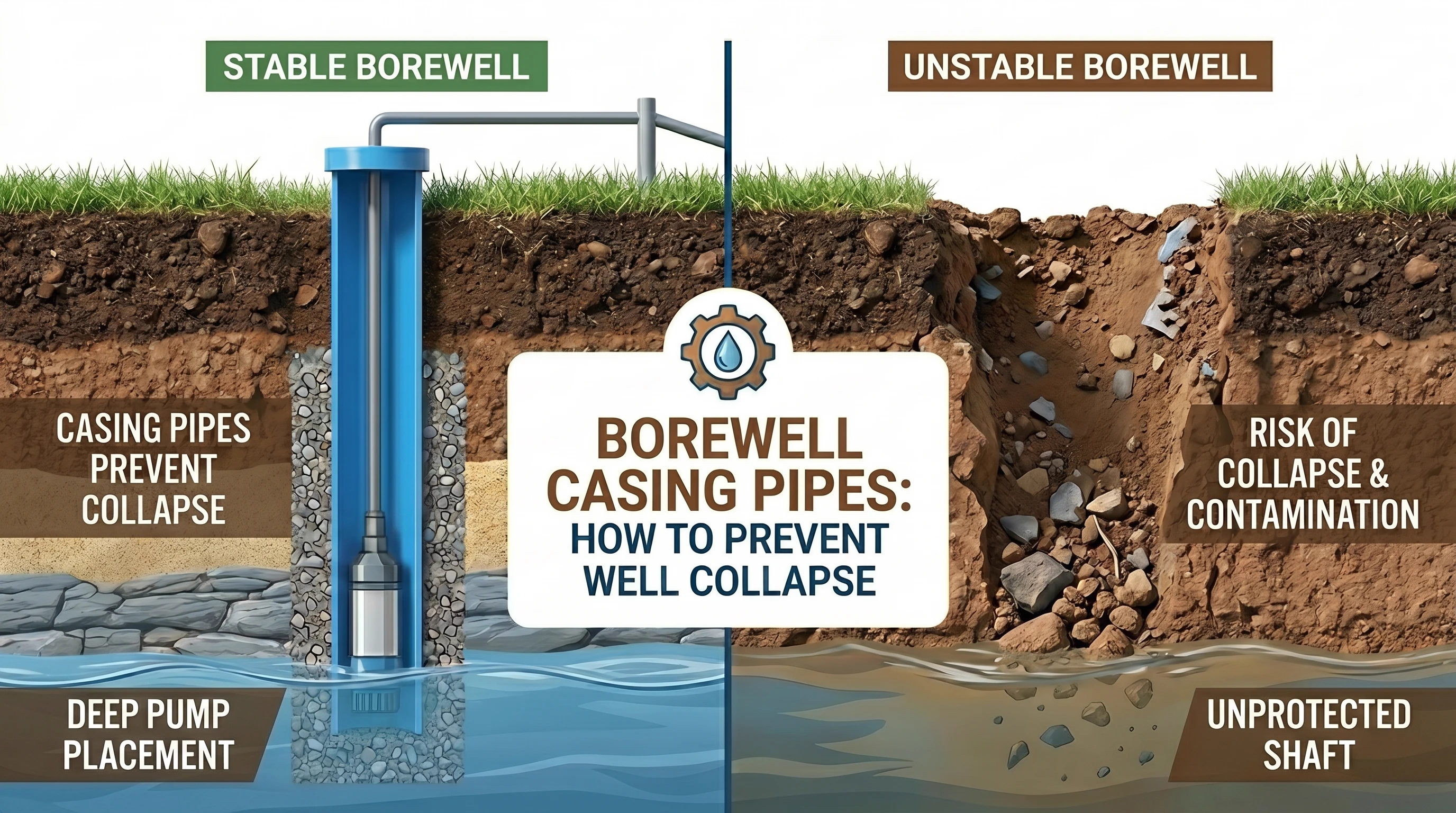
For farmers, industrialists, and homeowners, a borewell is a lifeline. However, the biggest nightmare for any well owner is a well collapse—a situation where the surrounding soil, rock, or loose gravel caves in, burying the expensive submersible pump and rendering the borewell useless.
The secret to a long-lasting, collapse-proof well lies in the quality and installation of the Borewell Casing Pipes. This guide explores how to choose the right pipes and the technical steps to ensure your water source remains secure for decades.
1. What is a Casing Pipe?
A casing pipe is a structural shield installed in the borewell to maintain the opening. It prevents the loose upper layers of the earth (overburden) from falling into the bore. While the lower part of the well usually sits in stable rock, the upper section requires a high-strength casing to act as a protective “sleeve.”
2. Why uPVC is Superior to Metal for Casing
Traditionally, mild steel pipes were used for casing, but they often failed due to rust. Today, high-grade uPVC (Unplasticized Polyvinyl Chloride) is the industry standard for several reasons:
- Corrosion Resistance:uPVC does not rust or scale, ensuring the water remains pure and the pipe wall doesn’t thin over time.
- High Tensile Strength: These pipes are engineered to support the massive weight of the entire pipe column and the submersible pump.
- Chemical Inertness: They are unaffected by the minerals and chemicals naturally present in groundwater.
- Lightweight: Easier to transport and install compared to heavy metal pipes, reducing labour costs.
3. How to Prevent Well Collapse: Pro Tips
Choose the Right “Class” or Pressure Rating
Casing pipes come in different categories (often labelled as Shallow, Medium, or Deep-well).
- Shallow Wells: Used for depths up to 80 metres.
- Medium / Deep Wells: For depths exceeding 150–200 metres, you must use pipes with thicker walls and higher collapse pressure ratings (SDR) to withstand the massive external soil pressure.
Use Ribbed Casing for Loose Soil
If your borewell is in an area with sandy or loose gravel, Ribbed Casing Pipes are essential. The ribs on the outer surface act as a bridge, preventing the surrounding soil from directly pressing against the pipe wall and improving the overall structural integrity of the well.
Proper Jointing
A casing pipe is only as strong as its joints. Ensure you use pipes with precision-cut threads and high-quality rubber rings to prevent the joints from shifting or leaking.
Vertical Alignment
A “crooked” borewell puts uneven stress on the casing pipes. Ensure the drilling rig is perfectly vertical. If the casing is forced into a bent hole, it is significantly more likely to crack or collapse under pressure.
4. Technical Comparison: Casing vs. Column Pipes
Many people confuse Casing Pipes with Column Pipes. Here is the difference:
| Feature | Casing Pipe | Column Pipe (uPVC) |
|---|---|---|
| Location | Stays in contact with the soil / bore wall | Hangs inside the casing; connected to the pump |
| Primary Goal | Prevents the well from collapsing | Transports water from the pump to the surface |
| Stress Type | External pressure (soil and water) | Internal pressure (water flow) and tensile load (pump weight) |
5. Summary Checklist for a Safe Borewell
- Verify ISI Marks: Always look for the ISI mark on pipes to ensure they meet national safety and strength standards.
- Check SDR / PN Ratings:Match the pipe’s pressure rating to the specific depth of your well.
- Avoid Substandard Materials:Using “recycled” or non-branded pipes is the #1 cause of well failure.
Conclusion
A borewell is a significant investment. Saving a small amount on low-quality casing pipes can lead to a total loss of the well later. By choosing high-tensile uPVC casing pipes and following professional installation standards, you ensure a reliable water supply for generations.
Planning a new borewell?
We provide a full range of high-strength uPVC Casing and Column pipes designed for deep-well applications. Contact us for technical specifications and dealer locations today.
Contact Us