
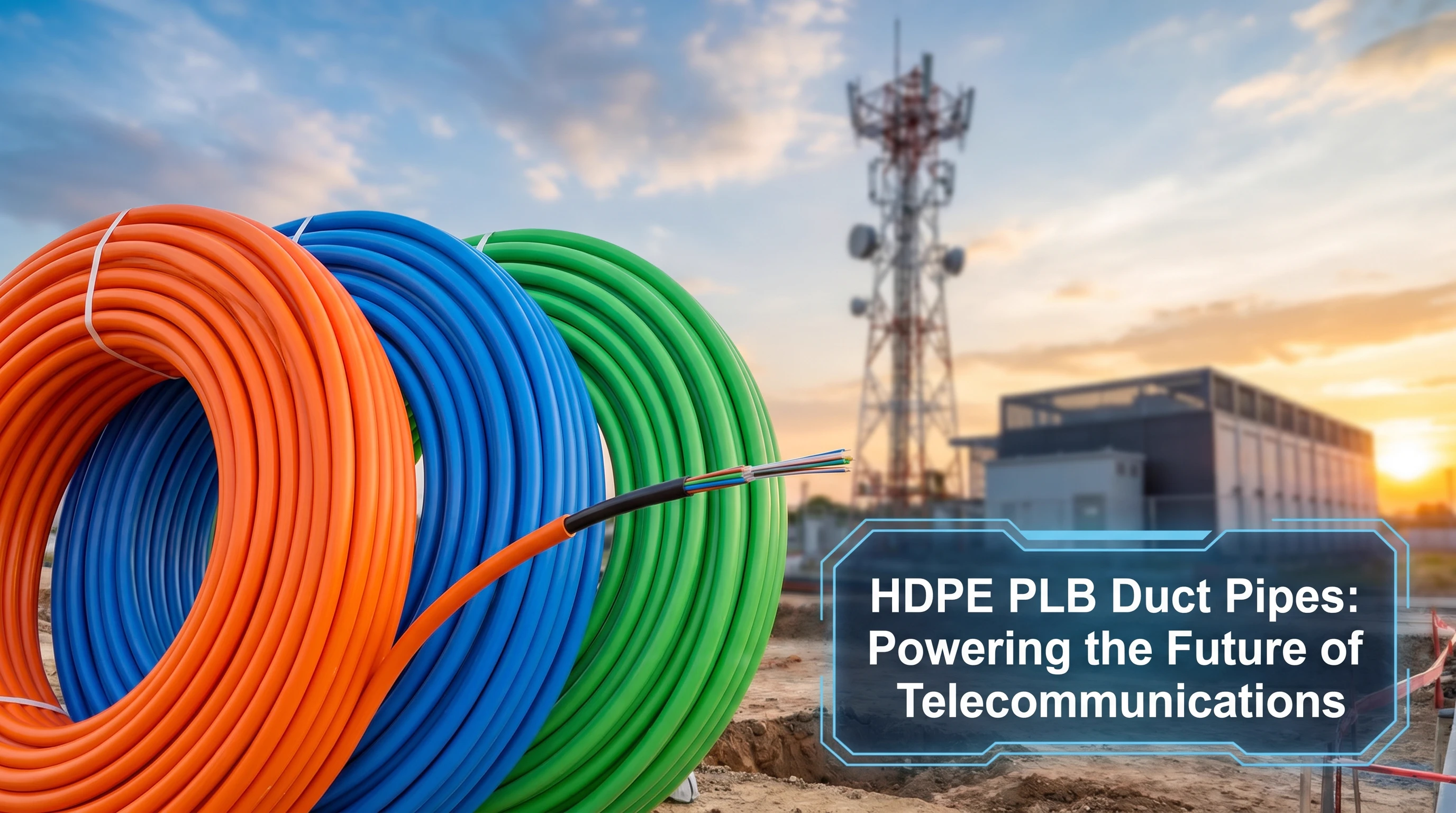
In the digital age, high-speed connectivity is the backbone of the global economy. Behind every “5G” signal and high-speed fiber-optic connection lies a hidden hero: the HDPE PLB (Permanently Lubricated) Duct Pipe.
As telecommunication giants expand their fiber-to-the-home (FTTH) and 5G networks, PLB ducts have become the standard for protecting the delicate glass fibres that carry our data. This article explores why PLB ducts are essential for modern tech infrastructure.
1. What Makes a Duct “PLB”?
Traditional HDPE pipes are smooth, but PLB ducts take engineering a step further with a dual-layer construction:
- The Outer Layer: Made of high-density polyethylene (HDPE) to provide physical strength, impact resistance, and protection against soil chemicals.
- The Inner Layer: A special solid lubricant (usually a silicone-based compound) is co-extruded during manufacturing. Unlike liquid lubricants that dry up over time, this layer is permanent, drastically reducing the friction coefficient.
2. Why PLB Ducts are Essential for Fibre Optics
Low Friction for “Cable Blowing”
The primary advantage of PLB ducts is the ease of installation. Because the internal surface is permanently lubricated, technicians can use high-pressure air to “blow” fibre optic cables through the duct over long distances (up to 2 km or more) in a single stretch. This reduces the number of joints and manholes required, lowering overall project costs.
Superior Protection
Fibre optic cables are extremely fragile. HDPE PLB ducts act as robust armour, protecting them from:
- Crush Loads: Withstanding the pressure of heavy soil and traffic.
- Rodents: High-density material prevents rodents from chewing through to the fibre.
- Moisture: Ensuring the cables stay dry and free from environmental degradation.
Future-Proofing (Easy Upgrades)
One of the smartest features of a duct system is that the infrastructure is “empty” until needed. If a network needs to be upgraded from 4G to 5G, or if a cable is damaged, the old cable can be pulled out and a new one blown in without re-digging the trenches.
3. Technical Specifications & Standards
For telecommunications projects, compliance with Department of Telecommunications (DOT) or international standards is mandatory.
- Standard Compliance: Most PLB ducts in India follow the TEC (Telecommunication Engineering Centre) specifications.
- Colour Coding: Available in various colours (Green, Blue, Orange, Yellow) to help identify different service providers in a shared trench.
- Sizes: Typically available in 32/26 mm, 40/33 mm, and 50/42 mm (Outer/Inner diameter).
4. PLB Ducts vs. Standard HDPE Pipes
| Feature | Standard HDPE Pipe | PLB Duct Pipe |
|---|---|---|
| Internal Surface | Smooth HDPE | Permanently Lubricated (Silicone) |
| Coefficient of Friction | High (~0.3 to 0.4) | Ultra-Low (< 0.1) |
| Installation Method | Manual Pulling | High-Pressure Air Blowing |
| Distance per Pull | Short | Very Long (1 km – 2 km+) |
5. Key Applications
- Optical Fibre Cable (OFC) Networks: The primary use for telecom backbones.
- Signal Cables: Used in railways and highway traffic management systems.
- Broadband & FTTH: Connecting residential buildings to high-speed internet.
Conclusion
HDPE PLB Duct pipes are the unsung facilitators of the digital revolution. By providing a low-friction, high-protection environment for fibre optics, they ensure that data moves faster and networks last longer. For any large-scale telecom deployment, choosing high-quality, TEC-compliant PLB ducts is the most critical decision for long-term reliability.
Powering a telecom rollout?
We manufacture high-performance HDPE PLB ducts designed for rapid fibre deployment. Contact us today for technical data sheets and export-ready quotes.
Contact Us