
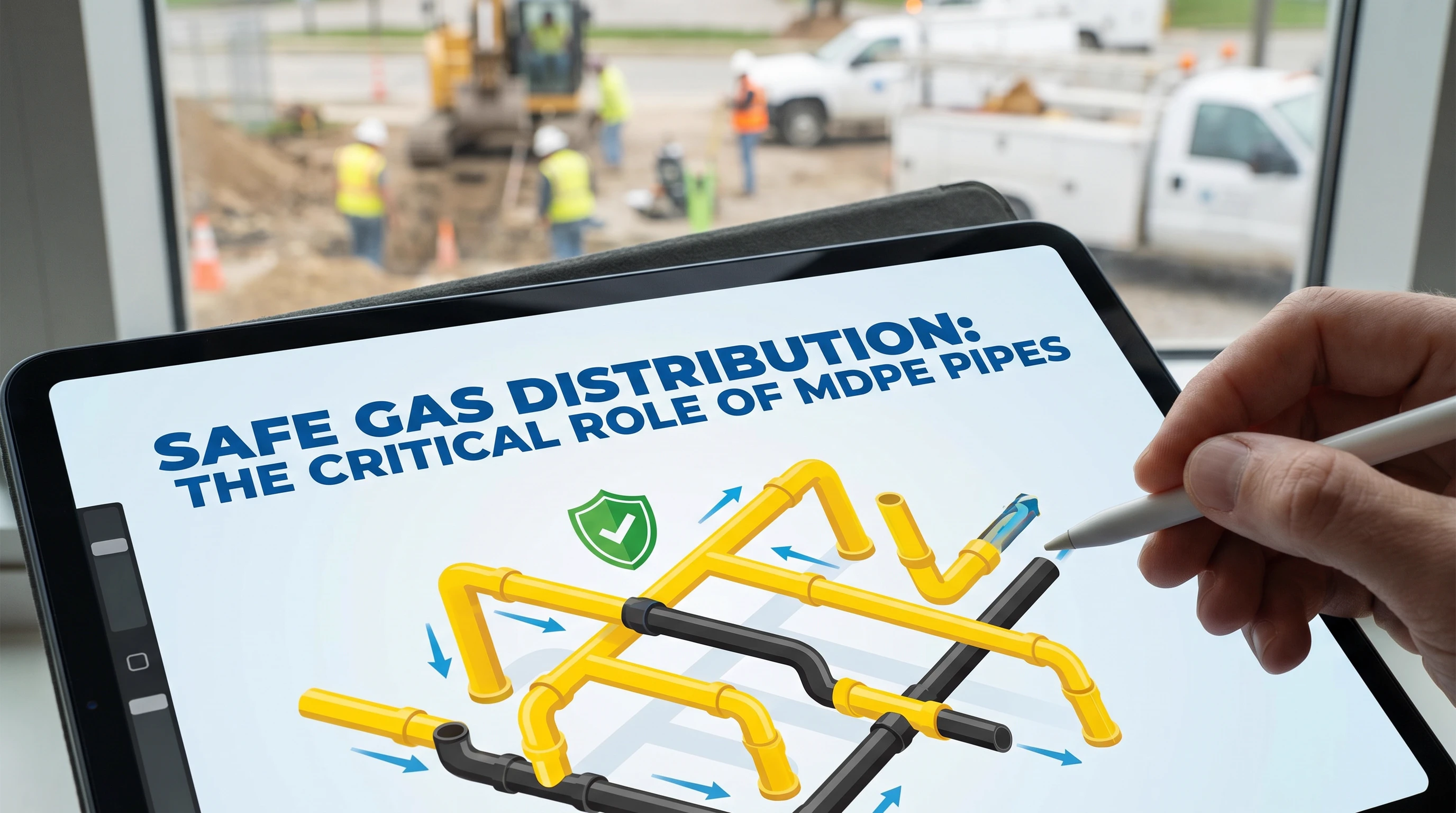
As cities move toward modern energy solutions, the infrastructure for Natural Gas (PNG) and Liquid Petroleum Gas (LPG) distribution has shifted underground. The material of choice for this critical task is MDPE (Medium Density Polyethylene) pipes.
While metal pipes were once the standard, MDPE has revolutionised gas distribution by offering a unique combination of flexibility and extreme safety. This article explores why MDPE is the backbone of safe gas networks worldwide.
1. What is MDPE? (The Engineering Edge)
MDPE is a sub-category of polyethylene defined by its density range. In gas distribution, it typically adheres to IS 14885 standards.
Unlike HDPE, which is more rigid, MDPE is engineered for a specific balance of stress crack resistance and ductility. This means it can withstand the internal pressure of gas while remaining flexible enough to survive external ground shifts.
2. Why MDPE is the Industry Standard for Gas
Flexibility and Ground Movement
Unlike rigid metal pipes, MDPE is highly flexible. In areas prone to soil subsidence, heavy traffic vibrations, or minor seismic activity, MDPE pipes bend rather than break. This “elastic” property significantly reduces the risk of catastrophic leaks caused by pipe fractures.
Corrosion Resistance
Gas lines are buried underground where they are exposed to moisture and soil chemicals. Metal pipes eventually rust, leading to “pinhole leaks” that are hard to detect. MDPE is 100% corrosion-resistant and does not require expensive cathodic protection or coatings.
Joint Integrity through Electro-fusion
The weakest link in any gas line is the joint. MDPE pipes are connected using Electro-fusion welding. This process uses an electric current to melt the pipe and fitting together, creating a permanent, monolithic bond that is actually stronger than the pipe itself.
Slow Crack Growth (SCG) Resistance
Gas distribution requires materials that can resist “Slow Crack Growth”—a phenomenon where a tiny scratch could eventually turn into a large split. MDPE grades like PE80 and PE100 are specifically formulated to stop cracks from propagating.
3. Visual Identification & Standards
For safety reasons, gas pipes must be easily identifiable to prevent accidental damage during future excavations.
- Colour Coding: MDPE gas pipes are typically Yellow or Black with Yellow Strips.
- ISI Compliance: For the Indian market, pipes must strictly follow IS 14885.
- SDR Ratings: Most gas distribution networks use SDR 11 or SDR 13.6 to ensure the wall thickness can handle the required operating pressure.
4. Technical Comparison: MDPE vs. Steel
| Feature | Steel Pipes | MDPE Pipes |
|---|---|---|
| Weight | Very Heavy; High Freight | Lightweight; Easy to handle |
| Corrosion | High Risk (Rusts) | Zero Risk (Chemically Inert) |
| Joining | Skilled Welding required | Fast Electro-fusion |
| Lifespan | 20–30 Years (with maintenance) | 50+ Years (Maintenance-free) |
5. Applications of MDPE Pipes
- City Gas Distribution (CGD): Main supply lines for residential kitchens.
- Industrial Fuel Lines: Safe transport of flammable gases in factories.
- LPG Manifolds: Distribution in commercial complexes and high-rise apartments.
Conclusion
When it comes to gas, safety is the only metric that matters. MDPE pipes provide a leak-proof, corrosion-free, and flexible solution that keeps our cities powered and our families safe. By adhering to ISI standards and utilising modern welding techniques, MDPE ensures that the future of energy distribution is secure.
Designing a Gas Distribution Network?
We manufacture high-quality MDPE pipes in PE80 and PE100 grades for gas and water applications. Contact us for a technical consultation and quote today.
Contact Us