
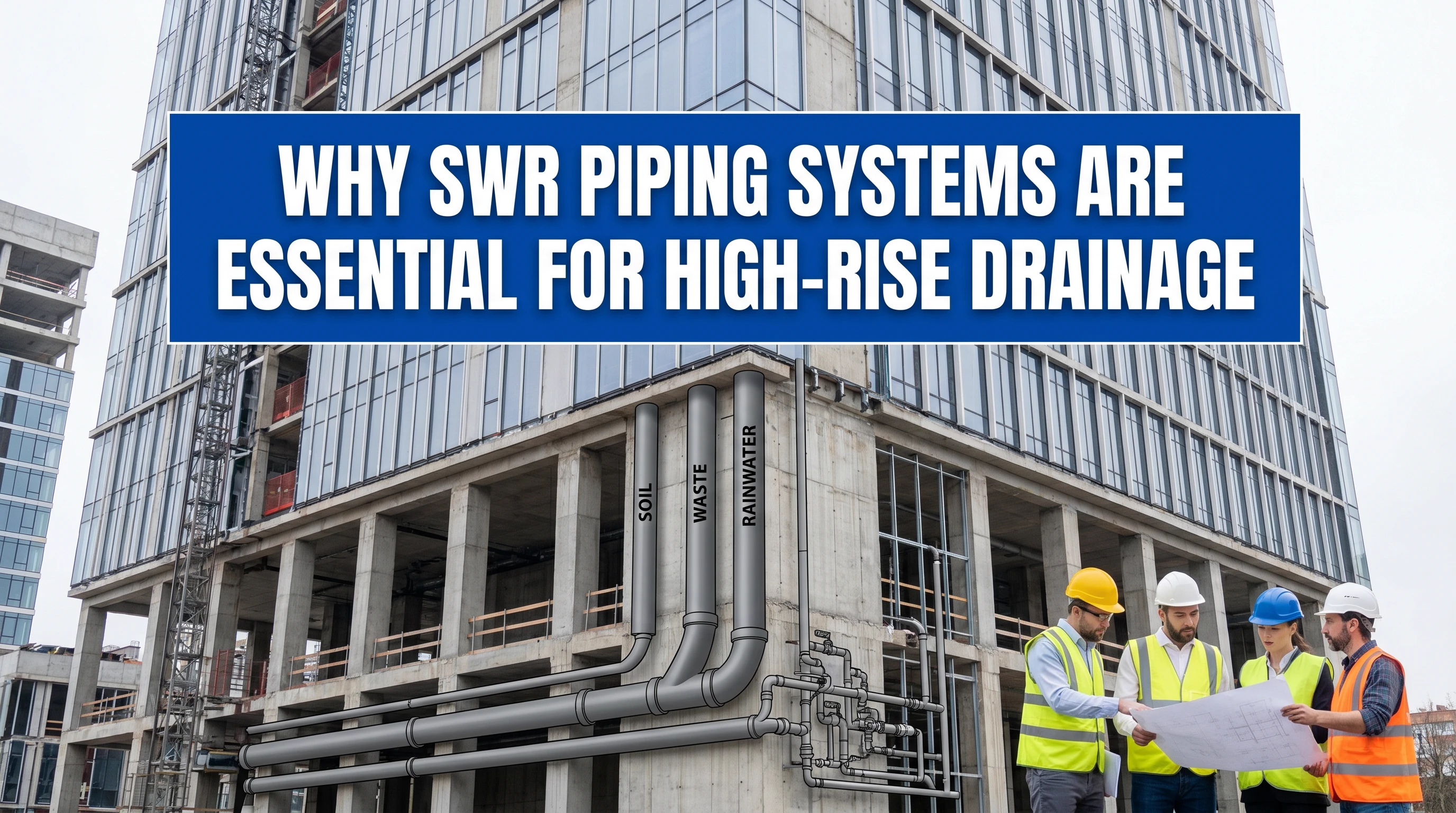
In high-rise construction, the plumbing system is under constant pressure—literally. As buildings climb higher, the complexity of managing waste and rainwater increases exponentially. Standard piping often fails to meet these demands, which is why SWR (Soil, Waste, and Rainwater) piping systems have become the industry standard for vertical drainage.
If you are a developer, contractor, or consultant, understanding why SWR systems are non-negotiable for high-rise projects is key to ensuring building longevity and resident comfort.
1. Defining SWR: The Three-in-One Solution
SWR pipes are specifically engineered to handle three distinct types of discharge in a single, cohesive system:
- Soil (S): Carries human waste from toilets to the main sewer line.
- Waste (W):Transports “greywater” from kitchens, bathrooms, and laundry areas.
- Rainwater (R): Channels heavy storm runoff from the roof and balconies to ground level.
2. Advanced Joint Technology: Ring-Fit vs. Self-Fit
In a high-rise, a single leak on the 20th floor can cause catastrophic damage to every floor below it. SWR systems solve this with specialised jointing methods:
- Rubber Ring-Fit (Push-Fit): These joints use high-quality EPDM rubber rings that allow for thermal expansion and contraction—a common occurrence in tall buildings due to temperature shifts. They provide a 100% leak-proof seal without the need for solvent cement.
- Self-Fit (Solvent-Fit): These joints are chemically welded using solvent cement, creating a permanent, monolithic bond ideal for horizontal branches.
3. High Impact Strength and Durability
The “stack height” of a high-rise means that waste falling from the upper floors gains significant velocity. SWR pipes are manufactured from high-tensile uPVC, which offers:
- High Impact Resistance: Able to withstand the force of high-velocity waste and external pressure during construction.
- Corrosion & Chemical Resistance: Unlike cast iron or concrete, SWR pipes are immune to the corrosive gases found in sewerage and the chemicals found in household detergents.
4. UV Stability for Outdoor Exposure
Many drainage stacks in high-rise buildings are installed on the exterior of the structure to save interior space. Standard PVC can become brittle when exposed to sunlight. SWR pipes are formulated with UV stabilisers that prevent degradation, ensuring they remain flexible and strong even under direct tropical sun for decades.
5. Maintenance-Friendly Design
SWR systems include a wide range of specialised fittings like door-tees, door-elbows, and vent cowls. These allow maintenance teams to access and clear blockages quickly through the “door” fitting without having to dismantle entire sections of the stack—a vital feature for occupied high-rise apartments.
Why uPVC SWR Beats Conventional Materials
| Feature | Cast Iron Pipes | SWR uPVC Pipes |
|---|---|---|
| Weight | Extremely Heavy | Lightweight & Easy to Install |
| Corrosion | Prone to Rusting | 100% Corrosion Resistant |
| Flow Rate | Rough interior (clogs easily) | Mirror-smooth interior (fast flow) |
| Installation | Requires specialised labour | Fast Push-fit / Solvent assembly |
Conclusion
For high-rise drainage, there is no room for error. SWR piping systems offer the perfect balance of strength, leak-proofing, and ease of maintenance. By investing in high-quality, ISI-standard SWR pipes, you protect the structural integrity of your building and the health of its occupants.
Sourcing for your next project?
We manufacture and supply a complete range of SWR pipes and fittings designed for high-performance drainage. Contact us for a technical brochure and bulk pricing today.
Contact Us